
GEOMAGNETISM
A cause of climate change that doesn't justify Carbon Tax.... yet.

Geomagnetism is the study of the dynamics and variations of Earth’s magnetic field, which extends from the planet’s interior into space as the magnetosphere. This field is primarily generated by geodynamo processes involving convection currents of molten iron and nickel in Earth’s outer core, with additional contributions from magnetised crustal rocks and electrical currents in the ionosphere.
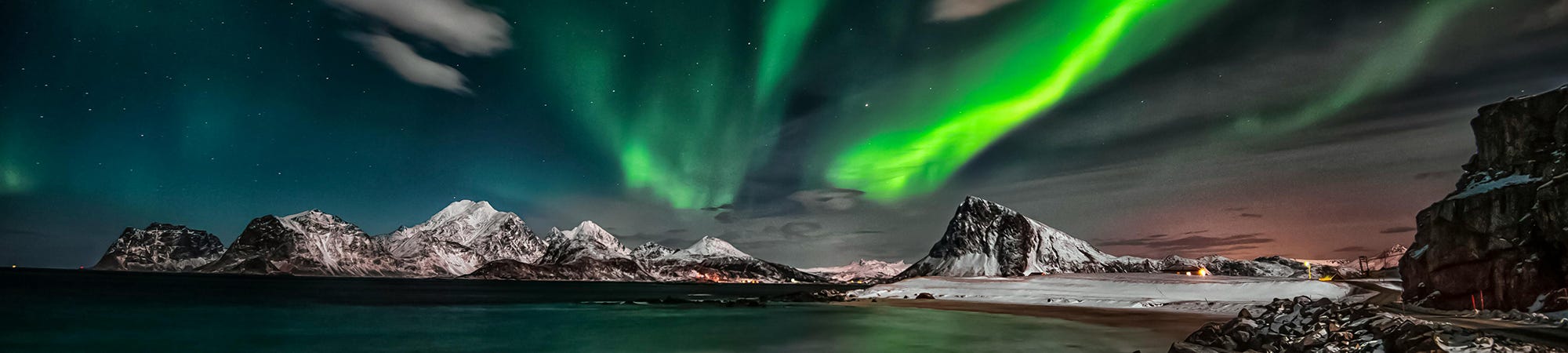
The geomagnetic field serves as a critical shield against solar wind and cosmic radiation, protecting the atmosphere and modern infrastructure from space weather hazards like geomagnetic storms. Research in this field utilises data from magnetic observatories, satellites, and paleomagnetic records to monitor changes, improve navigation accuracy, and understand the geological history of plate tectonics and magnetic reversals.
Earth’s magnetic field is currently experiencing a gradual decline in strength, a trend that has been observed for at least the last 180 years, at a rate of about 1% per decade.
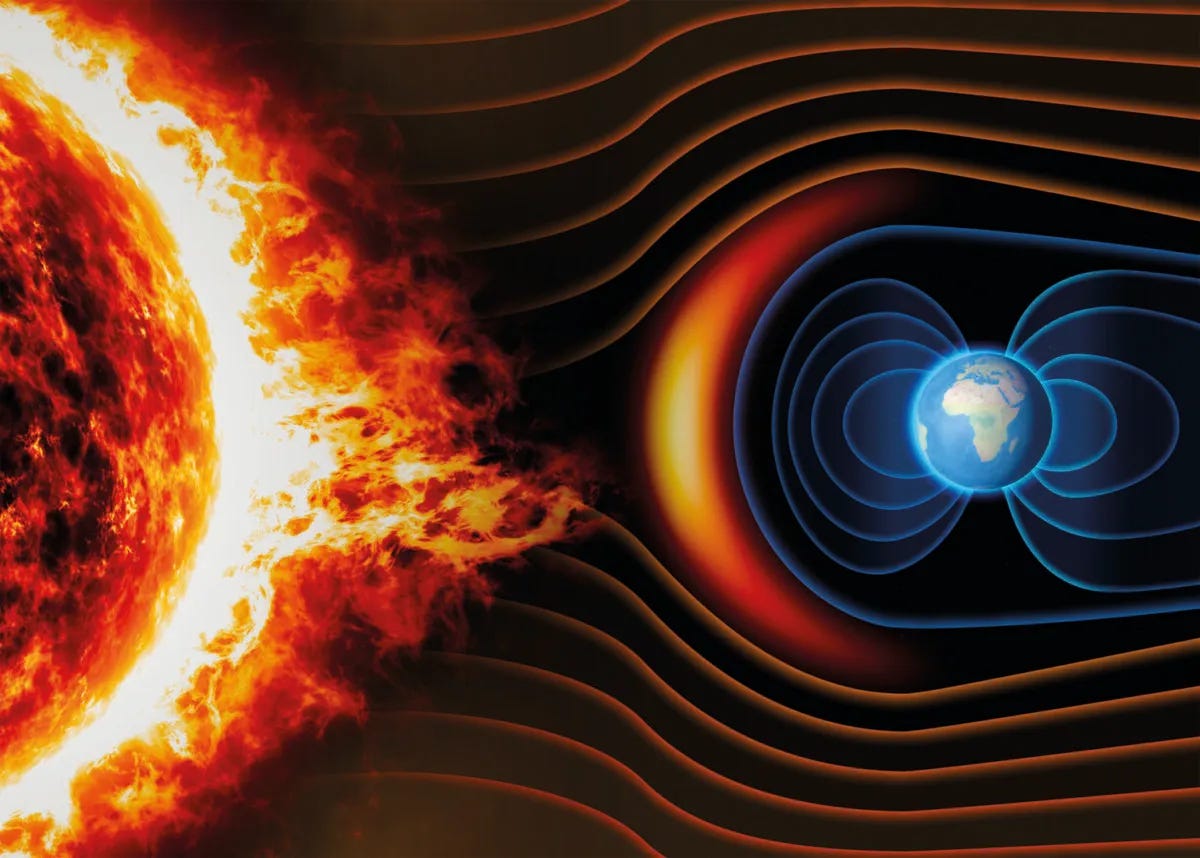
Scientists discovered how a reversal of Earth’s magnetic field affects our climate.
This weakening is not uniform across the globe. The most significant changes are occurring in a large region stretching from Africa to South America, known as the South Atlantic Anomaly (SAA). Data from the European Space Agency’s (ESA) Swarm satellite constellation shows this weak spot has expanded dramatically since 2014, growing by an area nearly half the size of continental Europe, with particularly rapid weakening southwest of Africa.
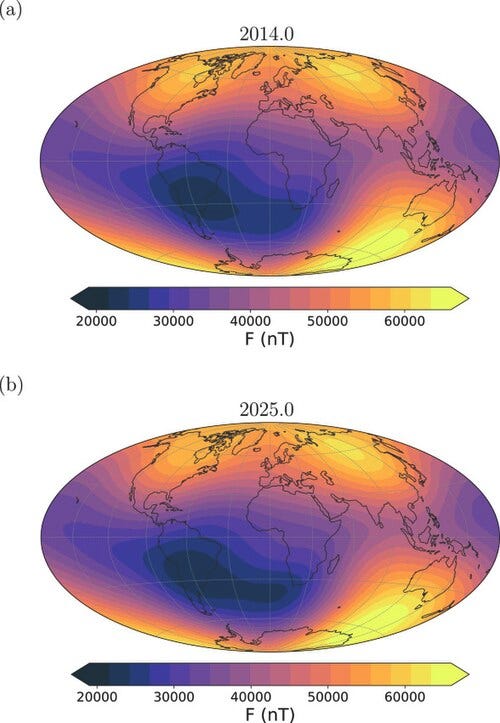
While this regional weakening is significant, it is considered part of the normal, dynamic behaviour of Earth’s magnetic field, driven by complex movements of molten iron in the planet’s outer core. Although the current changes fuel speculation about a potential future pole reversal, similar to the Adams Event 42,000 years ago, there is no conclusive evidence that a full reversal is imminent.
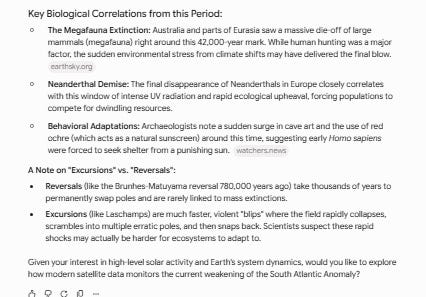
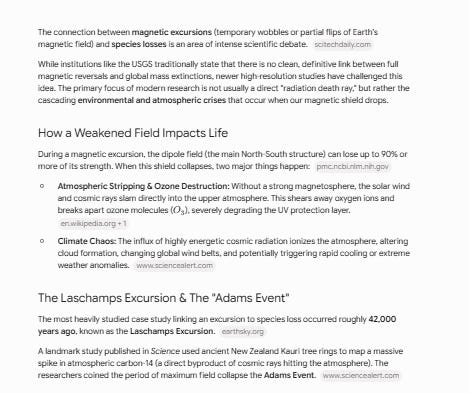
The Adams Event (also known as the Adams Transitional Geomagnetic Event) is a period of severe environmental and climatic disruption that occurred approximately 42,000 years ago, coinciding with the Laschamp geomagnetic excursion. Named after science fiction writer Douglas Adams due to the date’s alignment with the number “42” (the answer to life, the universe, and everything in The Hitchhiker’s Guide to the Galaxy), the event was triggered by a near-collapse of Earth’s magnetic field, which dropped to as low as 5-6% of its current strength.
During this transitional phase, the weakened magnetic shield allowed increased cosmic radiation to reach Earth, leading to:
* Drastic climate changes, including the growth of ice sheets and shifts in wind belts.
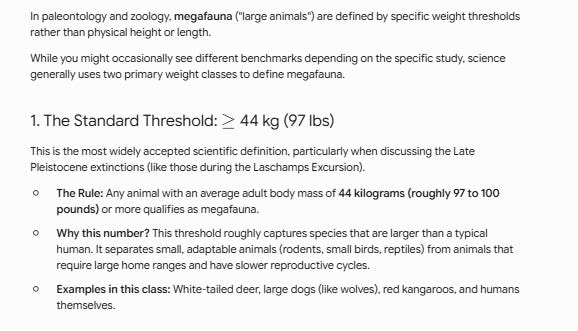
* Widespread extinctions of megafauna, such as the Diprotodon in Australia.
* Potential extinction of Neanderthals and behavioural shifts in early humans, possibly driving them into caves and contributing to the appearance of cave art.
* Atmospheric changes, including ozone depletion and frequent electrical storms and auroras visible at lower latitudes.
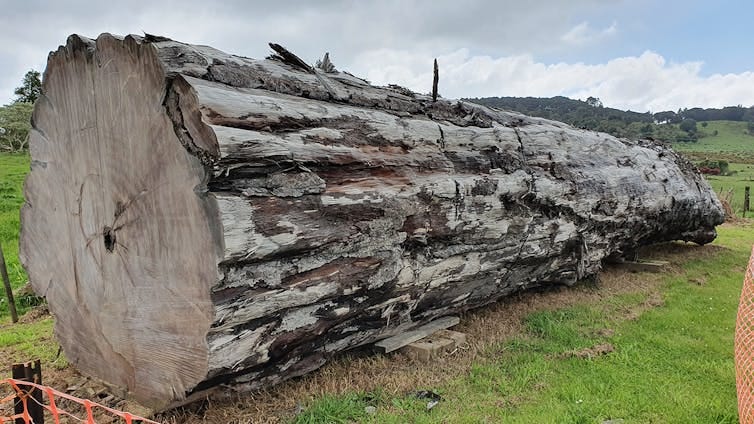
While the magnetic poles reversed for about 800 years, the most intense environmental impacts occurred in the centuries leading up to the reversal, as identified through radiocarbon dating of ancient New Zealand kauri trees.
Radiocarbon dating of ancient kauri trees is considered highly accurate for its time period, especially when combined with dendrochronology (tree-ring counting). The exceptional preservation of sub-fossil kauri wood from New Zealand swamps allows scientists to count annual growth rings, providing an exact “internal timestamp” for each sample.
This combination is critical for precision. Researchers extract sequential blocks of wood (e.g., 40 rings at a time) and date them using high-precision liquid scintillation counting (HPLSC) at facilities like the University of Waikato Radiocarbon Dating Laboratory. This technique is described as providing the “highest possible accuracy” for samples around 42,000 years old.
The dated radiocarbon data is then charted directly against the known tree-ring sequence, creating a precise timeline of atmospheric radiocarbon levels. This method was fundamental in identifying and dating the Adams Event, as it allowed scientists to track the exact timing of the massive radiocarbon spike caused by the collapse of Earth’s magnetic field.
Climate modelling
An article in The Conversation, Feb 2021 states:
Working with a computer programme that simulated the global interactions between chemistry and the climate, we investigated the impact of a weaker magnetic field and changes in the Sun’s strength. Importantly, during the magnetic switch, the strength of the magnetic field plummeted to less than 6% of what it is today. A compass back then would struggle to even find north.
With essentially no magnetic field, our planet totally lost its very effective shield against cosmic radiation, and many more of these very penetrating particles from space could access the top of the atmosphere. On top of this, the Sun experienced several “grand solar minima” throughout this period, during which the overall solar activity was generally much lower but also more unstable, sending out numerous massive solar flares that allowed more powerful ionising cosmic rays to reach Earth.
Our models showed that this combination of factors had an amplifying effect. The high energy cosmic rays from the galaxy and also enormous bursts of cosmic rays from solar flares were able to penetrate the upper atmosphere, charging the particles in the air and causing chemical changes that drove the loss of stratospheric ozone.
The modelled chemistry-climate simulations are consistent with the environmental shifts observed in many natural climate and environmental change archives. These conditions would have also extended the dazzling light shows of the aurora across the world – at times, nights would have been as bright as daytime. We suggest the dramatic changes and unprecedented high UV levels caused early humans to seek shelter in caves, explaining the apparent sudden flowering of cave art across the world 42,000 years ago.
It must have seemed like the end of days.
Learn more about geomagnetism - https://geomag.bgs.ac.uk/education/earthmag.html
With a nod to David Reed for his persistence!
—0—
ONWARDS!
xx
If you appreciate my research but cannot commit to a paid subscription you could buy me a coffee at: https://www.buymeacoffee.com/FrancesLeader
Please note that all my work is entirely free to read and will never be hidden behind a paywall. My lovely paying subscribers contribute knowing this to be true and I would like to take this opportunity to thank them very much for their ongoing support.
The important thing is sharing this educational information on social media, especially on X and Facebook and Discord where I am permanently excluded because my work upsets the totalitarians.
The weakening of our magnetic field was 10% between 1900 and 2000, then another 5% between 2000 and 2010, and NASA, the europeans and the Chinese are all keeping it secret since then. It is collapsing into a polar reset. The magnetic poles are undergoing an "excursion", with the north pole taking a quick walk towards Russia, as you likely know.
Apologizing for Ben Davidson's red-rooster personality, do look at these 4 short videos for the overview. The first makes it quite clear, and the others expand. A NASA friend showed me this.
https://www.youtube.com/watch?v=V2decDcEJqo&list=PLHSoxioQtwZcVcFC85TxEEiirgfXwhfsw
https://www.youtube.com/watch?v=QpjxrQP5hR4&list=PLHSoxioQtwZcVcFC85TxEEiirgfXwhfsw&index=2
https://www.youtube.com/watch?v=wZlivVDgwYQ&list=PLHSoxioQtwZcVcFC85TxEEiirgfXwhfsw&index=3
https://www.youtube.com/watch?v=iiXEL70xmzk&list=PLHSoxioQtwZcVcFC85TxEEiirgfXwhfsw&index=4
Where Douglas Adams likely got "42" from is this, "Paper 42, Energy, Mind and Matter" https://www.urantia.org/urantia-book-standardized/paper-42-energy-mind-and-matter
Mammoths flash frozen in Siberia and Northern Canada.